

Watch Enclave material guide
The clear part above the dial changes how a watch ages
Sapphire, mineral glass and Seiko Hardlex solve the same problem in different ways. Here is what those differences actually mean on the wrist.
Sapphire crystal is the best choice when scratch resistance is your priority. Mineral glass is the sensible value option, Seiko Hardlex is a proprietary hardened mineral crystal used across many of the brand’s sports and Presage watches, and acrylic is the soft, warm-looking vintage choice that can often be polished.
That is the short answer. The useful answer is less absolute. A watch crystal is part of a system: its thickness, shape, anti-reflective coating, case construction and intended use all affect how it behaves. A flat sapphire on an office watch and a raised box-shaped Hardlex over a dress dial are not trying to deliver the same experience.
This guide concentrates on the questions buyers can act on: which surface will stay clearer, what a sharp knock can do, whether glare matters, what can be repaired and when paying more for sapphire is worthwhile. The examples come from watches available at Watch Enclave on the date shown, not discontinued reference numbers chosen to make the comparison look convenient.
Which watch glass is best?
Choose for the way the watch will be worn, not for the most impressive word in the specification list.
Sapphire crystal
Best for: keeping a frequently worn watch looking clean. Its outstanding scratch resistance is especially useful around desks, door frames and metal fittings.
Mineral glass
Best for: good everyday protection at a lower watch price. It can collect marks sooner than sapphire, but it is not a disposable or inherently poor material.
Seiko Hardlex
Best for: buyers who want Seiko’s balance of design, durability and price. It is hardened mineral crystal—not a type of sapphire.
Acrylic crystal
Best for: vintage character, light weight and repairability. It scratches easily, although light surface marks can often be polished.
Sapphire vs mineral vs Hardlex vs acrylic
| Material | Scratch behaviour | Impact trade-off | Clarity and shape | Repair | Best suited to |
|---|---|---|---|---|---|
| Sapphire crystal | Excellent resistance to everyday surface scratches; not literally scratch-proof | Still vulnerable to a hard, sharp impact; construction matters | Very clear; coatings can reduce reflections; flat or shaped forms available | Usually replaced rather than polished | Daily wear, premium watches, owners bothered by fine marks |
| Mineral glass | More likely to mark than sapphire over time | Useful flexibility and a proven everyday compromise | Good clarity; readily formed into different shapes | Deeper marks normally mean replacement | Affordable quartz watches, fashion-led designs, normal daily wear |
| Seiko Hardlex | Hardened mineral surface; more scratch-prone than sapphire in ordinary ownership | Selected by Seiko for many sports and dress designs | Curved and box-shaped versions add character to the dial | Normally replaced if badly scratched or chipped | Seiko 5 Sports, Presage and buyers prioritising the complete watch |
| Acrylic | Scratches most easily, including from everyday rubbing | Light and less brittle in use | Warm vintage look; easily domed; can distort attractively at angles | Light marks can often be polished | Vintage watches, enthusiasts who value period-correct design |
The materials, properly explained
What each watch crystal is really like to own
Sapphire crystal: the scratch-resistance benchmark
Watch sapphire is lab-grown aluminium oxide rather than ordinary glass. Its practical advantage is simple: it resists the fine scratches that gradually haze softer surfaces. That makes it valuable on a watch you expect to wear for years, particularly if you work at a desk or regularly brush the watch against zips, buckles and hardware.
The usual sales phrase is “scratch-proof”. Treat that as shorthand, not a guarantee. Diamond and some other very hard materials can mark sapphire, while a coating on the outer surface may show a line even when the crystal below is undamaged. A direct impact on an edge can also chip or fracture a sapphire crystal. The correct claim is highly scratch-resistant.
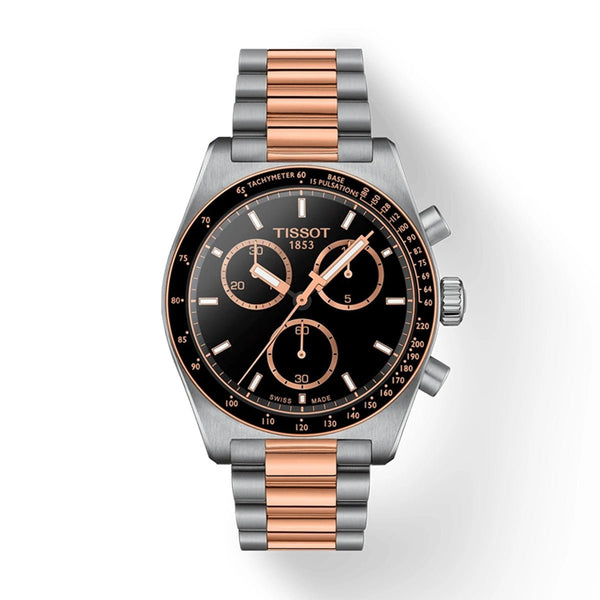
Reflection is a separate issue. Sapphire can look mirror-like under strong light, so some watches use anti-reflective treatment. A coating applied to the underside is protected by the crystal; an external coating can be more exposed. The Tissot PR516 in this guide specifies an anti-reflective coating, which helps its black dial remain readable without changing the underlying sapphire.
Mineral glass: the practical mainstream choice
Mineral watch glass is treated or tempered glass made for everyday use. It is less expensive to produce than sapphire and gives designers freedom to create large, curved or fashion-led cases without pushing the finished price too far. Citizen’s own guidance also points to mineral crystal’s flexibility as one reason it is used in robust everyday models.
The compromise appears gradually rather than dramatically: mineral glass is more likely to acquire hairline marks. That matters most on a watch with a broad, exposed crystal. It matters less if you rotate several watches, wear them carefully or would rather spend the budget on the dial, bracelet or movement.
Hardlex: Seiko’s hardened mineral crystal
Hardlex is a Seiko name, not a universal material grade. It belongs to the mineral-crystal family and is hardened for watch use. Seiko employs it in very different forms: a curved Hardlex over compact 5 Sports models, a box-shaped Hardlex that contributes to the vintage profile of Presage Cocktail Time watches, and other versions across its range.
It is tempting to assign Hardlex a single Mohs number and place it neatly between mineral and sapphire. That is more certainty than the manufacturer provides. Treatments, thickness and shape vary, so the honest buying rule is simpler: expect better real-world intent than the words “standard glass” imply, but expect scratches sooner than with sapphire.
Acrylic: softer, warmer and easier to revive
Acrylic is a transparent plastic often associated with vintage watches. It is light, inexpensive and easy to form into a high dome, producing the warm edge distortion collectors enjoy. It will mark much more readily than the other choices, sometimes from something as ordinary as a sleeve rubbing grit across the surface.
Its redeeming feature is repairability. Fine surface scratches can often be polished by a competent owner or watchmaker. Deep damage may still require replacement, and polishing should never be used as a reason to attack an unknown crystal with household abrasives.
Why sand matters more than keys
Online demonstrations often drag keys across a crystal. That tells you little about years of wear. Fine grit can contain hard mineral particles; pressure from a sleeve, cleaning cloth or work surface can carry them across the crystal. Rinse or blow away loose debris before wiping.
Why the case still matters
A raised crystal is more exposed than one protected by a bezel. Thickness, curvature, gasket support and the direction of an impact all change the result. Do not use the crystal material alone to judge a watch’s overall durability—or its water resistance.
Five claims to ignore
- “Sapphire is unbreakable.” It is highly scratch-resistant, not immune to chips, edge damage or fracture.
- “Hardlex is a budget sapphire.” Hardlex is Seiko’s hardened mineral crystal family.
- “A key test proves the material.” It risks the watch, may test a coating rather than the crystal and does not identify the specification reliably.
- “A drop of water reveals sapphire.” Surface cleanliness and coatings affect how water beads; it is not a dependable identification method.
- “Toothpaste removes every scratch.” It can damage coatings and finishes. Check the manufacturer’s specification and use professional advice before polishing anything.
Six current watches that show the difference
The crystal is one reason to choose each model—not permission to ignore movement, size, water resistance or design.

Tissot PRX 35mm
35mm · 9.6mm · Quartz · 100m

Tissot PR516 Chronograph
40mm · 11.3mm · Quartz · 100m

Seiko 5 Sports SRPK89K1
37.4mm · Automatic · 100m

Seiko Presage SRPE15J1
40.5mm · Automatic · 50m

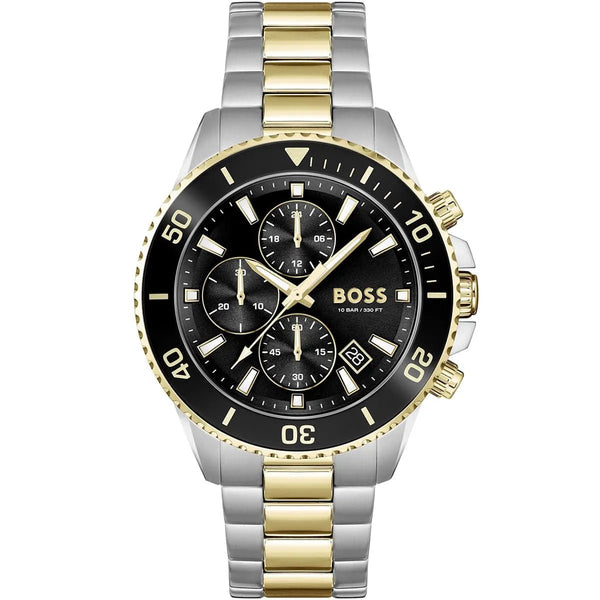
BOSS Admiral 1513908
46mm · Quartz · 100m

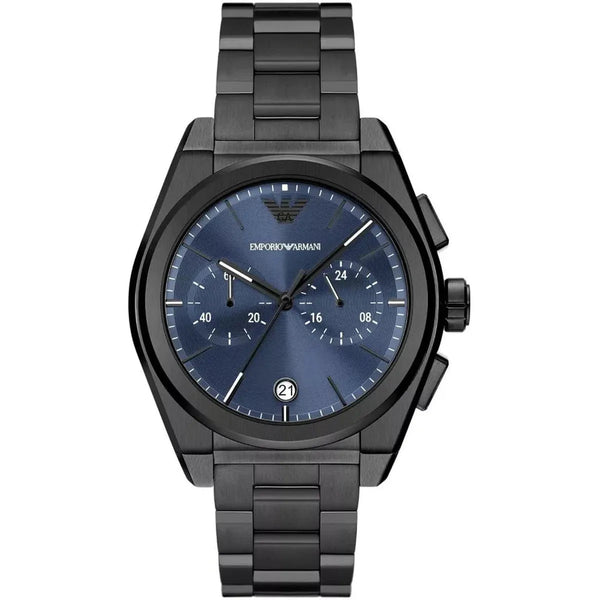
Emporio Armani Federico AR11561
43mm · 10mm · Quartz · 50m

Sapphire for a polished daily watch
Tissot PRX T137.210.33.021.00
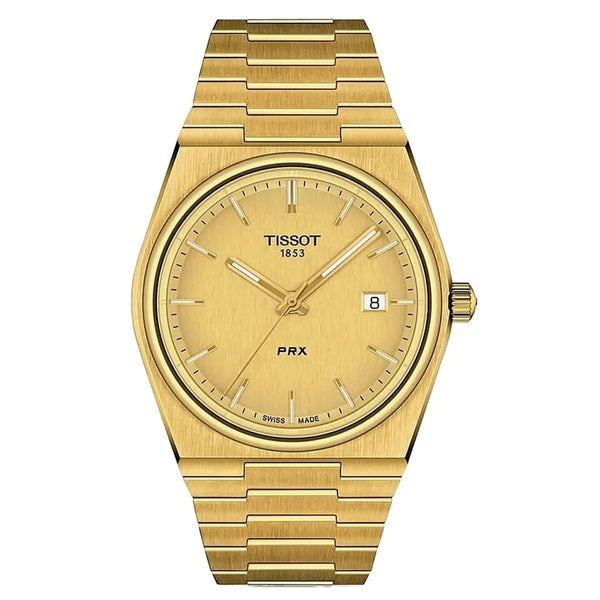
The PRX is a good argument for paying for sapphire when the crystal is only one part of the appeal. Its 35mm case, champagne dial and yellow-gold PVD finish create a compact, jewellery-like watch, while the flat crystal keeps the integrated silhouette clean.
At 97g it has enough weight to feel substantial without the bulk of a large sports model. Sapphire suits the brief: fine marks across the dial would be especially visible on this polished design. Choose it for a smart daily watch that should retain a crisp surface—not because sapphire makes the entire gold-tone finish scratch-proof.
View the Tissot PRX 35mm
Sapphire with anti-reflective treatment
Tissot PR516 T149.417.22.051.01
The PR516 shows why “sapphire” is not the end of the specification. Its coating is intended to control reflections over a busy black chronograph dial, where glare can hide the sub-dials and tachymeter detail. That is a more meaningful upgrade than hardness alone.
The 40mm case and two-tone 145g bracelet give it more wrist presence than the PRX. It is the stronger choice for someone who wants a sporty Swiss quartz chronograph and expects regular wear. As with any coated crystal, treat unexplained surface marks carefully: the visible line may involve the coating, not the sapphire beneath it.
View the Tissot PR516
Curved Hardlex in a compact automatic
Seiko 5 Sports SRPK89K1
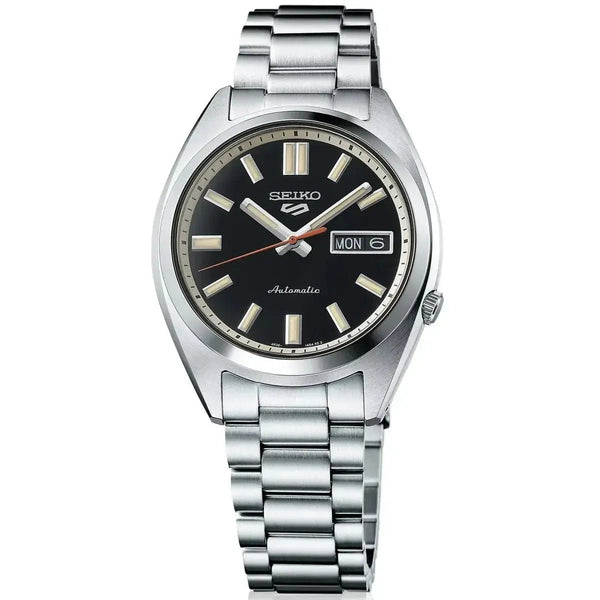
The SRPK89K1 uses curved Hardlex as part of its late-1960s-inspired shape. Sapphire would win a scratch test, but judging this watch only on that line would miss the compact 37.4mm case, automatic day-date movement and the way the crystal supports its retro profile.
This is the honest Hardlex proposition: accept that the surface may show wear sooner than sapphire in exchange for the Seiko design and specification at the finished price. It suits someone who wants a compact automatic sports watch and is prepared to treat the crystal like a wearable object, not a laboratory sample.
View Seiko SRPK89K1
Hardlex chosen for shape and character
Seiko Presage Cocktail Time SRPE15J1
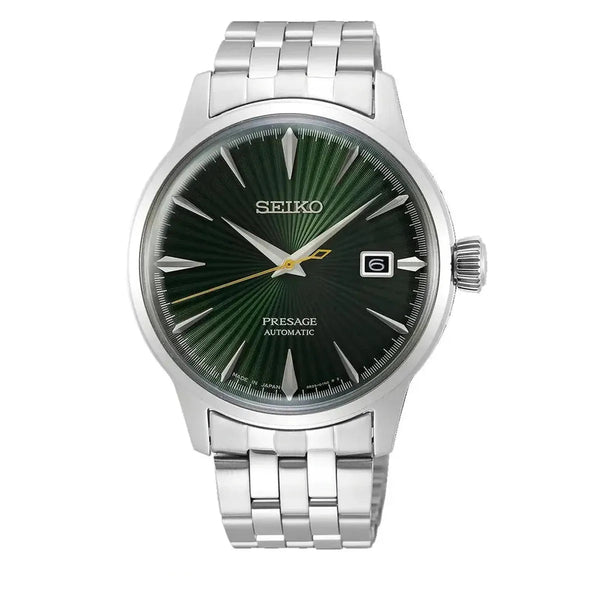
The Presage makes the visual case for Hardlex. Its box-shaped crystal contributes height, edge distortion and a vintage frame for the dark emerald sunburst dial. Replacing it with a flat sheet of sapphire would change more than the durability line; it would change the watch’s personality.
At 11.8mm thick and 135g, this is a substantial dress-led automatic rather than a featherweight formal watch. Choose it for the dial, curved profile and mechanical movement. If an immaculate crystal after years of desk wear is your non-negotiable requirement, a sapphire Tissot is the safer match.
View Seiko Presage SRPE15J1
Mineral crystal in a statement design
BOSS Admiral 1513908
The Admiral spends its budget on scale and styling: a 46mm two-tone case, black rotating bezel, chronograph display and 100-metre rating. Mineral crystal helps keep that combination near the £200 reviewed price.
Its broad crystal is more exposed than the compact PRX, so owners who work with tools or constantly catch watches against hard surfaces should account for that. For a buyer who rotates watches and wants a bold weekend design, mineral is a reasonable compromise. The 155g weight and 46mm diameter are the more immediate buying decisions.
View BOSS Admiral 1513908
Mineral crystal for design-led value
Emporio Armani Federico AR11561
The Federico pairs a gunmetal case and bracelet with a blue chronograph dial. At 10mm thick it sits lower than its 43mm diameter suggests, and the mineral crystal keeps the reviewed price at £229 despite the substantial 158g construction.
This is the watch to buy because the colour, finish and designer styling suit you—not because mineral outperforms sapphire. Rotate it with other watches, clear grit before wiping the crystal and it can serve perfectly well. If the first visible scratch would spoil ownership for you, move to a sapphire model before buying.
View Emporio Armani AR11561Buying advice
How to choose the right crystal for your watch
Desk and everyday wear
Choose sapphire if you wear one watch most days and fine scratches bother you. It is particularly worthwhile on a clean dial where every surface mark catches the light. An underside anti-reflective coating is a useful bonus on darker dials.
Active work and outdoor use
Do not reduce durability to the crystal name. Look for bezel protection, a secure crown, appropriate water resistance and a case size that will not catch everything around it. Read our water-resistance guide before treating an ATM figure as an all-purpose guarantee.
Design and value first
Mineral or Hardlex can be the correct choice when a watch wins on dial, movement, shape or price. Compare the whole package, including our quartz vs automatic guide, then decide whether crystal scratches would genuinely change your enjoyment.
Common questions
Watch crystal FAQs
Is sapphire crystal really scratch-proof?
No. Sapphire crystal is extremely scratch-resistant and synthetic corundum ranks 9 on the Mohs hardness scale, but very hard materials can still mark it. An exposed anti-reflective coating may also show wear even when the sapphire below is intact.
Is Hardlex better than mineral glass?
Hardlex is Seiko’s proprietary hardened mineral crystal, so it belongs to the mineral-glass family rather than sitting in a completely separate category. It is a purposeful watch material, but sapphire normally offers better resistance to everyday surface scratches.
Does sapphire break more easily than mineral glass?
There is no useful universal yes-or-no answer for complete watches. Sapphire is very hard, while mineral glass has more flexibility; however, crystal thickness, shape, edge protection, gasket support and the direction of an impact all affect whether a crystal chips, fractures or survives.
Can scratches be removed from mineral watch glass?
Light acrylic scratches can often be polished, but mineral glass is much less forgiving. DIY abrasives can alter optical coatings or damage nearby finishes, and deeper marks normally require crystal replacement. Ask a watchmaker to identify the material before attempting a repair.
How can I tell which crystal my watch has?
Check the manufacturer’s specification using the exact model or reference number. Water-drop, tapping and scratch tests are unreliable and can cause damage. If the documentation is unavailable, a competent watchmaker can assess the watch without using a destructive home test.
Does the crystal type determine water resistance?
No. Water resistance depends on the complete case system, including gaskets, crown, pushers, caseback and assembly. A sapphire crystal does not make a watch suitable for swimming, and a mineral or Hardlex crystal does not prevent a properly rated watch from being water-resistant.
Compare the complete watch
Shop by design, then check the crystal
Use the crystal as a practical filter alongside movement, case size, water resistance and the style you will actually wear.
Prices, availability and product specifications checked on 7 August 2026 and may change. Always use the specification on the live product page at the time of purchase.
Sources checked: GIA sapphire care and Mohs hardness; Tissot watchmaking know-how; Citizen mineral vs sapphire guidance; and Seiko Presage Cocktail Time material notes. Product dimensions and crystal types were checked against current Watch Enclave product specifications.


